




Autumn Statement 2016
The Autumn Statement 2016 was presented to Parliament by Chancellor Philip Hammond on 23 November.
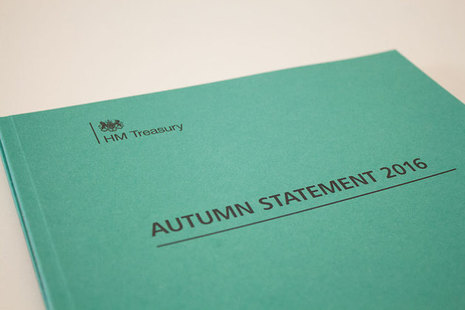
Some of the built environment highlights are set out below:
A proposal to ban letting agents from charging fees to renters. The government will consult on this in due course.
A new National Productivity Investment Fund (NPIF) to provide £23 billion of additional spending on transport, digital communications, research and development, and housing including:
- £1.1 billion to reduce congestion and upgrade local roads and public transport.
- £220 million to tackle road safety and congestion on Highways England roads.
- £27 million to develop an expressway connecting Oxford and Cambridge.
£2.3 billion for a new Housing Infrastructure Fund for projects such as roads and water connections that will support the construction of up to 100,000 new homes.
£1.4 billion to provide 40,000 new affordable homes, including some for shared ownership and some for affordable rent.
£1.7 billion to speed up the construction of new homes on public sector land.
A £390 million investment in future transport technology, including driverless cars, renewable fuels and energy efficient transport.
£1 billion to invest in full-fibre broadband and trialling 5G networks.
An increase in funding for infrastructure projects of more than £800 million for the Scottish Government, £400 million for the Welsh Government and £250 million for the Northern Ireland Executive to spend on infrastructure projects.
You can see the full Autumn Statement here.
[edit] Related articles on Designing Buildings Wiki
Featured articles
Check out some of the best features and news from Designing Buildings as well as key stories from around the web.

Government approach could undermine delivery and regeneration.
World's first mass timber data centre.

The overlooked environmental aspect of data centre development.
Introduction to radon awareness

New technical information sheet published by CIOB.

Updated supplier guide can help electrical contractors engage with NHP.

CIAT confirm the winners of the 2026 architectural technology awards.

Government launches a one stop shop for flood preparedness.

Sir Edwin Lutyens: Britain's greatest architect? Book review.

CIOB publishes free template to help assess and manage risks.
ECA's reflections on Party Conference season

Burnham wants to be confident of winning before asking for a fresh mandate.
New Chief Construction and Scientific Adviser

Sergio Cavalaro, Professor of Infrastructure Systems at Loughborough University.
Building safety levy for England

CIAT publish estimator tool for members.

Water sector faces a growing crisis that could slow the delivery of vital infrastructure.